
Sonny Cobbs and the Making of Precision Football

 That line told me everything.
 That line told me everything.
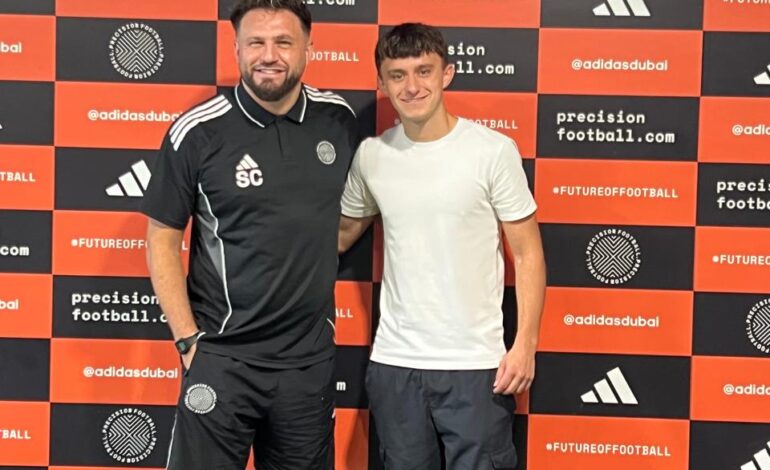
I arrived at Precision Football on a warm afternoon in Dubai. I ordered a flat white and waited in the café. A few minutes later Sonny joined me before the interview. He ordered a coffee as well and we sat for a while just talking. Nothing formal. We spoke about school, football, and how things were going.
It felt relaxed and genuine. No ego. No performance. Just a proper chat between two people who love the game.
As we left the café and walked toward the rest of the facility, I noticed how everyone greeted him. Coaches, players, even the café staff stopped to shake his hand or smile. You could see the respect and warmth straight away. That moment told me more about him than any introduction could.
I had come to speak with Sonny about his journey from Brighton’s academy to building one of the UAE’s most respected football environments, but before we had even started the interview I already understood the kind of culture he had created.
Early years and the dream
Sonny told me his first memory of football came through a rugby ball. His dad played rugby and one day he found himself kicking conversions in the garden. He laughed as he told me that he was left footed and that nobody else in his school could strike a ball the way he could.
By six or seven he was already winning local tournaments. He said he still remembers that first medal and that first sense of belonging.
As a teenager he started playing for Brighton Boys, then earned a place at Southampton’s academy. It was a tough environment with big names around. Gareth Bale. Adam Lallana. You had to stand out to survive.
Later came Brighton, the club closest to home. He joined full time at sixteen and that was the moment it all became real. The scholarship. The travel with the first team. The training ground mornings that ran into late evenings.
He smiled when he talked about that period. “I had an agent, a boot deal with Umbro, even saw my name on FIFA,” he said. “You take it for granted when you’re young. You think it will last forever.”
Football rarely gives second chances. Brighton were fighting between the Championship and League One. Results mattered more than development. He was a defender and managers needed experience.
When the cut came he dealt with it the only way he knew how. He kept playing. Sutton. Welling. The Conference South. Different grounds and styles but all real football. He said those years taught him resilience and perspective.
The decision to move abroad
After England came Lebanon. He went there chasing a professional contract and a chance to keep doing what he loved. He had also looked at the United States, Australia, and the Philippines. He had that mindset of someone who refused to let football go quietly.
His sister worked for Emirates and moved to Dubai. His father was in Qatar. When he came to visit he saw opportunity. It was not clear how yet but he felt it.
“I realised pretty quickly that if I wanted to stay in football I’d have to start giving back,” he told me. “I wanted to be a better coach than I was a player.”
That became his mission. He started coaching locally and built his first company, Royal Football Academy. He ran sessions across Dubai and Sharjah, driving between venues every day. The coaching took off, but the travel was draining and the facilities were never consistent. He wanted a place that felt like home for football.
The birth of Precision
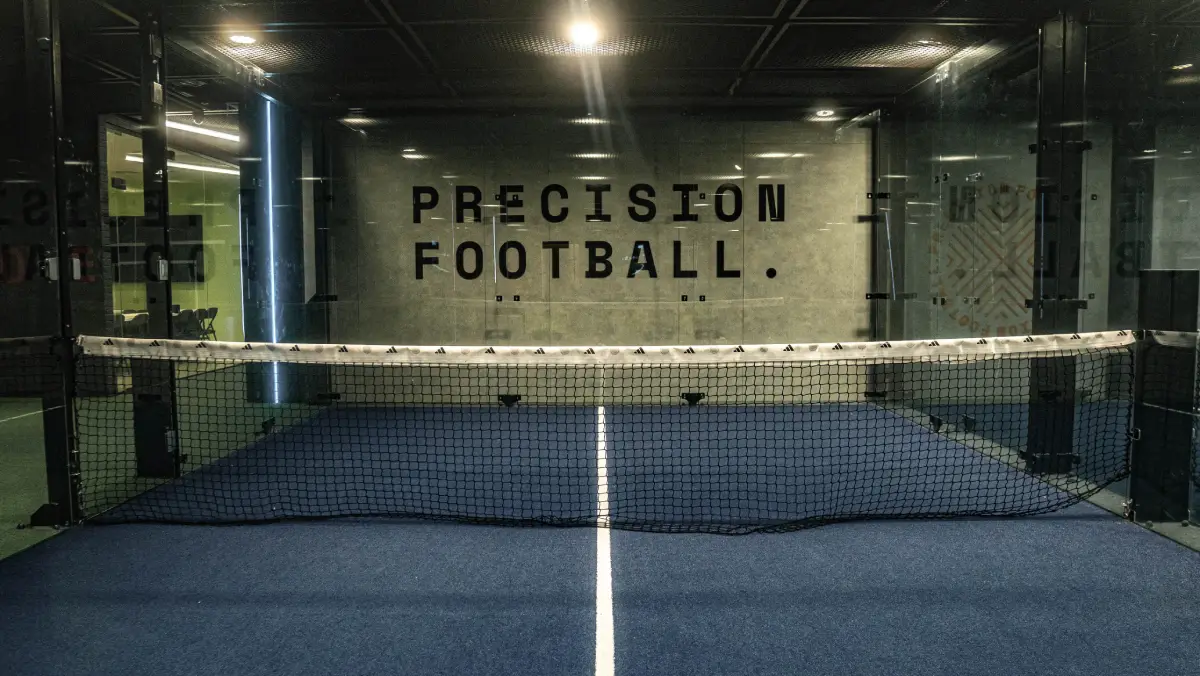
The idea came together slowly. He had visited IMG Academy in Florida, one of the top sports education centres in the world, and saw a level of detail that fascinated him. Mind gyms, sports science, biometric testing, video analysis. Every corner of that place was designed to build complete athletes.
He wanted to bring that same level of ambition to the Gulf. Not to copy it but to adapt it for the region. He wanted a centre that blended coaching and technology, a space that could test, teach, and inspire.
“When you’ve got nothing to lose you find out how much you actually believe in your idea,” he said. “I just kept going. I pitched to people. I refused to stop.”
Eventually he found the right partners. He built the model, refined the plan, and turned an idea into Precision Football.
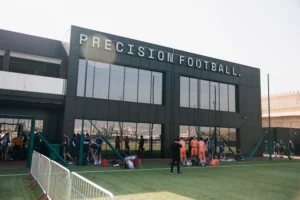
Today the centre has indoor and outdoor pitches, analysis rooms, testing labs, and one of the most detailed youth coaching structures in the country.
The culture inside
Culture is a word that gets used too easily but here it has meaning. The first thing you notice at Precision is respect. Staff, players, parents. Everyone speaks to each other properly.
“I make mistakes every day,” Sonny said. “But the one thing I’ll never get wrong is the environment. You can’t learn without positivity. You can’t grow without standards.”
He knows the names of every coach and player. He checks sessions personally. He knows when to joke and when to push.
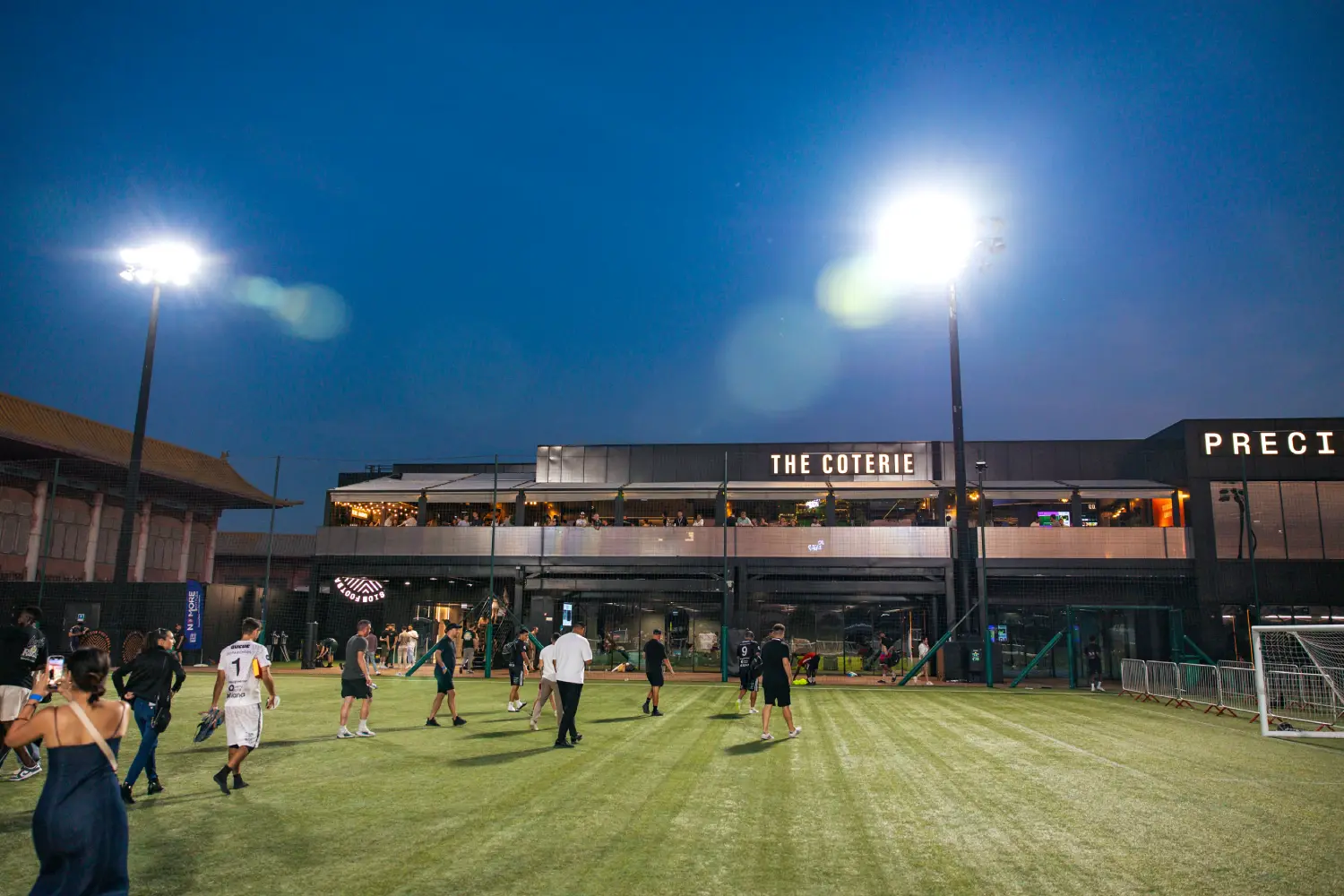
That day I saw a group of under-tens finishing a technical session while older players were preparing for their evening training. Upstairs, parents watched from the café as conversations mixed between laughter and analysis. It felt more like a club than a business.
That was always the aim.
“I wanted somewhere that feels like a football village,” he said. “A place where you can train, rest, eat, learn, and feel part of something.”
From academy to professional
Precision began as a training hub but now it has become a professional football club. The first team launched in 2023 with 120 trialists and no established players. Within a year they had earned promotion from Division 3 to Division 2.
That progress shows more than results. It represents a structure that works. Players from over twenty nationalities have represented Precision. Some came from Europe, others were based in the UAE.
He explained how difficult it can be to blend so many cultures. In some countries being ten minutes late is normal. At Precision, he said, you arrive ten minutes early or you are not ready. Small habits build professionalism.
“We might not have the budget of a big club but we have the mentality,” he said.
Names like Ravel Morrison, Ben Pringle, Harry Arter, and Cameroon international Joel Bong have all been part of the project. Their influence has lifted standards across the group. Younger players watch how they train, how they eat, and how they prepare. That sets the tone for everyone around them.
Football in the UAE
The UAE football structure is changing fast. The leagues have been restructured, investment is rising, and private clubs like Precision are starting to push the traditional boundaries.
“We went from Division 3 to Division 2 and signed international players,” Sonny said. “The more structured we become, the stronger football in the region will be.”
He is right. The Gulf has real momentum. With Saudi Arabia hosting the 2034 World Cup, attention and ambition are only growing. You can feel it in local matches and in the passion people bring to even the smallest training sessions.
Philosophy and management
Sonny describes himself as a modern coach with old-school grit. He believes in playing with the ball but only when it has purpose. He is pragmatic, flexible, and obsessed with detail.
“Every player should know where to be, when to press, how to react,” he said. “It is problem solving. Football is a game of chess.”
He admitted that he sometimes overthinks. He laughed about how often he changes his team during the week before a match. But behind that is preparation and commitment.
“I gather as much information as possible. Then I decide. That is my job,” he said. “Some people will agree, some will not. That is football.”
He spoke openly about the challenges of management. About dealing with players, criticism, and pressure. There is no ego in his words, just a sense of realism.
“I have learned to be thick skinned. You cannot please everyone,” he said. “You just make the best call you can and live with it.”
Looking ahead
Sonny visualises the future every day. He wants to build multiple Precision centres across the Middle East, each carrying the same values and standards.
On the football side he dreams of reaching the UAE Pro League within five years. A second site is already in the planning stages.
When I asked him what success looks like he spoke about development, not trophies.
“If a seventeen year old comes through our system and plays in Europe, that is success,” he said. “If a young coach earns their next badge and moves on, that is success. If we are all better today than we were yesterday, we are winning.”
The final word
Before I left the centre Sonny walked me back through the building. He stopped to speak to a young coach setting up cones, checked a video in the analysis room, smiled, and turned back to me.
“This place is still growing,” he said. “But it is real now. It is alive.”
That line stayed with me.
Football in the Gulf is evolving. You can see it in the facilities, in the coaching standards, and in the way people talk about the game. Precision Football is part of that movement but it also stands apart from it. It feels like a glimpse of what football in this region can become.
For Sonny Cobbs it is not about being the biggest name. It is about setting a standard that lasts.
As I left and looked back at the lights across the pitches, I realised he already has.
